
 Jesse Hitt • 27 Nov 2025 • 6 min read
3 Ways to Improve Talks Between HOA Boards and Residents

Key Takeaways
- Strong communication between boards and residents depends on consistent systems, not individual effort.
- Centralized digital tools reduce confusion by keeping announcements, documents, and payment information in one accessible place.
- Two-way feedback channels (including digital surveys and structured Q&A) help residents feel heard and give boards insight before making decisions.
- Clear, consistent messaging builds credibility, improves compliance, and reduces the likelihood of conflict.
- Platforms like PayHOA combine communication features with financial and management tools, so volunteer boards can lead confidently without the chaos.

Why Communication Between HOA Boards and Residents Breaks Down
Effective communication supports a healthy association. When boards and residents share information openly, they solve problems faster and maintain trust.
For many volunteer boards, the missing piece isn’t effort. It’s the lack of a structured system that supports consistent communication. Without one, boards end up juggling email threads, paper mail, and separate apps, and residents get frustrated trying to track it all down.
That’s where community association management software comes in. Instead of scattered messages and surprise announcements, boards can communicate in a unified environment with less stress and greater clarity.
Three strategies work together to make this happen: centralized digital tools, two-way feedback channels, and clear, consistent messaging.
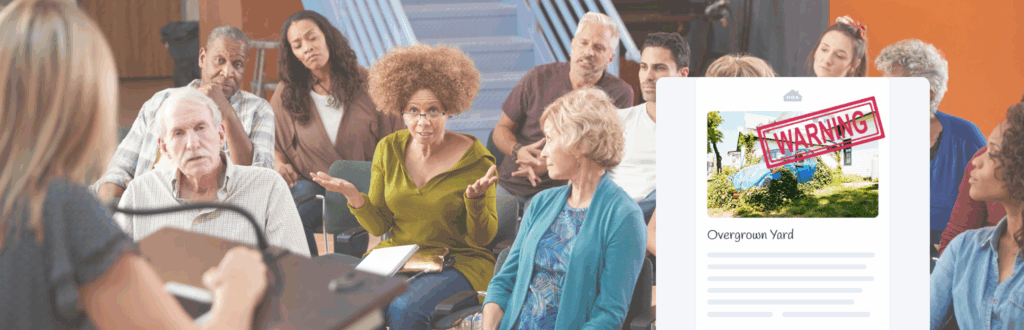
The Foundation: Why HOA Communication Matters
Communication shapes perception. When residents receive timely HOA management updates, they see an organized, transparent board. Slow or confusing updates erode trust.
Information gaps appear when boards make decisions without explanation. This fuels speculation and frustration. One-way communication (or instances in which the board makes decisions independently) leads to resentment, even when the decisions are sound.
Good communication helps residents understand the rationale and timelines behind board actions. It turns compliance into cooperation and reduces conflict before it starts.
To move from scattered messages to a more deliberate approach, boards can focus on three strategies supported by community association management software.
Strategy 1: Centralized Digital Tools with Community Association Management Software
Centralized communication tools funnel all your community engagement into a single source of truth. Instead of information scattered across email threads, Facebook groups, and filing cabinets, everything lives in one place: meeting minutes, financial reports, governing documents, and community updates.
This does two things. First, it saves volunteer boards time. Residents can log in to pay dues, submit maintenance requests, or check policy documents without emailing the treasurer or calling the property manager. Second, it builds trust. When homeowners can access accurate information whenever they need it, transparency becomes automatic.
A strong platform provides:
- Document storage: minutes, covenants, policies, and financial summaries
- Self-service features: online payments, maintenance requests, and AI chatbot support
- Automation: routine reminders and announcements that run without manual effort
Some residents will always prefer paper notices, and that’s fine. But a digital portal becomes the central record where everyone can find what they need, when they need it. No hunting through old emails or waiting for callbacks.
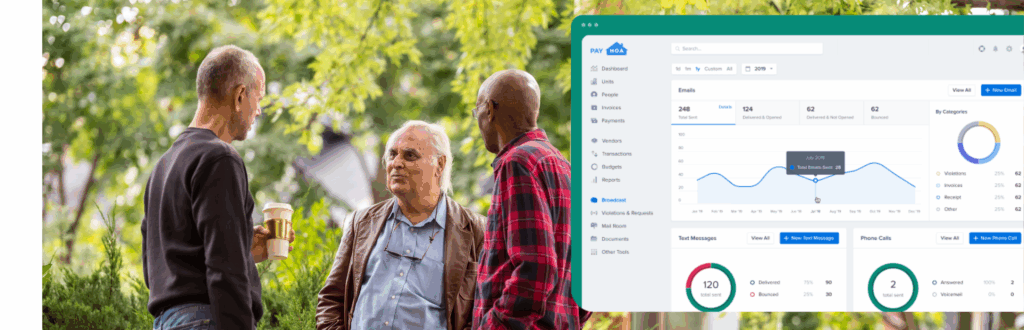
Strategy 2: Two-Way Feedback Channels
Communication improves when it flows in both directions. Two-way feedback channels enable residents to share opinions, report issues, and participate in community decision-making. Instead of hearing about projects only after they’re approved, residents can weigh in early and feel a sense of ownership over their community.
Surveys or polls on upcoming projects help boards gauge community sentiment on topics such as parking rules, clubhouse hours, and landscape priorities. Online suggestion forms and dedicated board email addresses give residents additional ways to weigh in. Digital tools like PayHOA’s survey and voting features organize responses and link them to units or households, making it easy to gather and analyze feedback without sorting through paper or managing spreadsheets.
When these channels are used consistently, residents start to believe their voice and input matter (not just their dues payments). That belief improves cooperation, even when residents disagree with a final decision. Small boards don’t feel overwhelmed when feedback comes in waves, and residents feel they were given a fair chance to speak.
External resources can also guide your approach. Organizations like the Community Associations Institute publish best practices for resident participation and governance. Federal resources, such as the IRS publication on tax-exempt organizations, underscore the importance of documentation and transparency. Security guidance, such as the NIST Cybersecurity Framework, reminds boards that digital feedback tools sit inside a broader obligation to protect resident data.
Strategy 3: Clear and Consistent Messaging
Even with excellent tools and feedback mechanisms, communication can fall short if messages are unclear or unpredictable. Clear and consistent messaging focuses on the quality, tone, and timing of information.
Clarity begins with language. Avoid jargon wherever possible. Instead of referencing obscure terms or abbreviations, explain issues in everyday language. Short paragraphs and descriptive subject lines highlight what’s most important.
Consistency with the schedule and channels is key. For example, a board might decide that official notices arrive via email and portal posts, while less urgent items appear on bulletin boards. Residents learn what to expect and where to look.
Tone matters too. A calm, factual, and respectful style encourages residents to read messages with an open mind. Designating one person or a small committee to lead communications helps unify the board’s voice, even as membership changes.
A thoughtful messaging strategy fits naturally with community association management software. The board might announce an upcoming survey in a newsletter, distribute it via the portal, and share the findings and next steps in a follow-up email. Over time, residents learn that communication has a rhythm and that their input fits into that rhythm.

Combining the Three Strategies
Centralized digital tools, two-way feedback, and clear messaging address different parts of the same communication problem. They work best together.
Centralized tools focus on access, ensuring that documents, announcements, and records live in a single, predictable environment. Residents learn where to go for answers, and boards spend less time forwarding attachments or repeating themselves.
Two-way feedback channels focus on participation, enabling residents to speak as well as listen. Surveys, structured Q&A, and digital forms help boards take the pulse of the community before finalizing decisions.
Clear and consistent messaging emphasizes understanding, improving communication quality to avoid confusion or unexpected outcomes.
The critical point is to treat communication as a system rather than a string of individual, one-off strategies.
How Can HOAs Improve Communication With Residents?
Boards often ask how to improve communication without doubling their workload. The answer is choosing tools that reinforce each other. Centralized platforms keep you organized, feedback channels provide data, and clear messaging prevents misunderstandings.
Platforms like PayHOA support this by combining communication, finance, and management into a single system. Volunteer boards can move away from scattered spreadsheets and endless email threads and focus on building a community where residents feel connected and informed.
Share this article:
Enjoyed this Article? Try Another!

From Dirt to Doors: Successful Community Association Management During Developer Transitions
Key Takeaways If you’re a parent, you probably remember the hospital exit moment. They kick…

From Paper to Platform: Why Financial Automation Is Non-Negotiable for HOAs
Key Takeaways Nobody volunteers for an HOA role because they dream of reconciling bank statements…
Stop Juggling Tools: The Reality of Homeowners Association Management
Key Takeaways The Digital Balancing Act You likely stepped up to serve on your board…