
 Jesse Hitt • 28 May 2026 • 7 min read
Are You Collecting Dues or Annoying Neighbors? The Complete Guide to HOA Dues Collection

Key Takeaways:
- HOA dues fund everyday services and long-term reserves, from landscaping and insurance to future repairs.
- A clear collection policy helps boards enforce payments consistently and avoid awkward follow-up.
- Digital payment tools give homeowners easier ways to pay and give boards cleaner records, fewer errors, and steadier cash flow.
- Strong communication turns dues collection from a monthly scramble into a transparent, repeatable process.

The Invisible Burden of the Paper Trail
Saturday afternoon should not disappear into a stack of envelopes, a spreadsheet, and a deposit slip. Yet plenty of volunteer board members know that routine:
- Open the checks
- Match each payment to the right owner
- Update the ledger
- Prepare the bank deposit
- Cross your fingers and hope you didn’t miss anything.
Managing HOA Finances carries real responsibility, which means it’s better to implement more order and less friction in your process. When a community relies on yard signs, paper reminders, or door-knocking, the board spends too much energy chasing money rather than improving the neighborhood.
A better system for collecting HOA dues starts with clarity. Homeowners understand what they owe, when it’s due, how to pay, and what happens when a balance becomes late. Boards gain a repeatable process that protects relationships and reduces human error.

What HOA Dues Are, and Why Boards Collect Them
HOA dues are regular payments homeowners make to support the association’s operating budget and long-term financial obligations. These funds cover shared expenses, including insurance premiums, landscaping, common-area utilities, maintenance, and reserve contributions.
The board’s authority to collect association dues is typically derived from the community’s governing documents, including the declaration, bylaws, and CC&Rs. Those documents outline the owner’s obligations and provide the association with the structure it needs to maintain shared property.
Regular dues differ from special assessments and emergency fees. Regular dues cover recurring costs approved through the annual budget. These are separate from a special assessment, which usually funds a major capital need, such as a roof replacement, road repair, or pool renovation. Forward-thinking boards with better dues collections and budgeting practices can often avoid special assessments.
The Math Behind HOA Dues
The cleanest calculation begins with the budget. A board estimates annual operating costs, adds planned reserve contributions, reviews expected income beyond dues, and divides the remaining amount according to the formula in the governing documents. Many communities divide expenses evenly by unit, while others use percentage ownership, square footage, or another documented method.
For a simple example, imagine a basic 50-unit community with a $30,000 annual budget. If every unit pays the same share, each owner contributes $600 per year, or $50 per month. The number is simple. The discipline behind it is the important part.
Artificially low dues can make today’s board popular and tomorrow’s board miserable. When a community underfunds reserves for years, an ordinary capital project can become a financial crisis. Healthy homeowners association payments help the board plan ahead and reduce the chance of a large special assessment.
Boards can compare assumptions against industry education from organizations such as the Community Associations Institute (CAI), then work with qualified legal, tax, or reserve professionals when decisions involve added complexity.
Payment Frequency and Channels
Monthly billing feels familiar to many homeowners because it fits the rhythm of mortgages, utilities, and subscriptions. It can also create steadier cash flow. Quarterly or annual billing reduces invoice volume, but larger lump-sum payments may lead to more missed deadlines or resident pushback.
Payment channels matter just as much as frequency. Paper checks still work for some communities, but they require extra handling, slower deposits, and more opportunities for lost mail or manual-entry errors. Lockboxes can reduce some of the burden, though they still leave boards dependent on a process that feels invisible to residents.
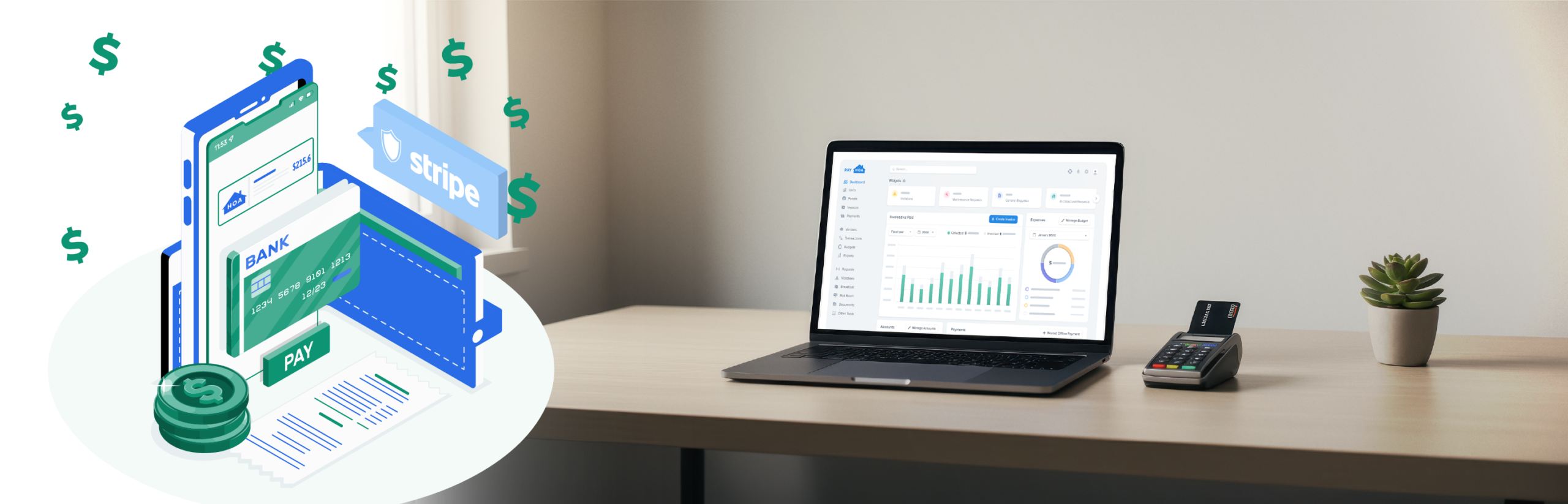
Digital options, including ACH, credit cards, debit cards, and e-checks, give residents flexibility and help boards track each HOA payment more accurately. AutoPay is especially useful because it turns a recurring obligation into a set-it-and-move-on routine.
Whatever payment channels the board offers, the collection policy needs a standard grace period and notification timeline. Consistency wards off claims of favoritism and keeps enforcement focused on policy rather than personalities.
The High Cost of Manual Collection
Manual collection looks inexpensive until the board counts the hours. Someone answers balance questions, updates a spreadsheet, checks the mail, drives deposits to the bank, reconciles records, and follows up with late accounts. And what about the consequences of a lost check?
That time has value, even when volunteers donate it freely.
Manual systems also make transparency harder. When financial data is stored in a single person’s spreadsheet, the board may struggle to answer basic questions quickly. Who has paid? Which invoices are overdue? What late fees were applied? A single formula error can create confusion that takes hours to unwind.
Centralized HOA bookkeeping gives associations a cleaner way to organize records, support reporting, and prepare for audits or tax season. It also protects continuity when board transitions, and turnover naturally occurs.

How Digital Financial Systems Change the Job
Modern HOA accounting software automates many of the tasks that make dues collection feel like a second job. Boards can invoice owners, track balances, apply late fees, reconcile payments, and generate reports from one system instead of moving between spreadsheets, email threads, and bank statements.
For residents, the biggest benefit is convenience. They can pay HOA dues online, review account history, update payment information, and receive reminders without contacting a board member for every question. For boards, the benefit is control. Real-time visibility helps leaders spot delinquency early, understand cash flow, and make decisions with current information.
This is where the digital property management company model becomes valuable for smaller or self-managed communities. A traditional property management company may offer on-site staff, vendor coordination, and bundled services. A digital PMC delivers enhanced management through software and remote support, providing volunteer boards with professional-grade systems without the full-service price tag.
A Self-managed HOA can use this model to keep local control while bringing structure to the work. The board still leads the community, but the system handles the repetitive financial mechanics that drain time and patience.
Helping Residents Adopt a Better Process
A smooth digital transition begins with plain-language communication. Residents want to know what’s changing, why it’s changing, and how the new process affects them. A short newsletter article, a simple how-to guide, and a few screenshots can remove a surprising amount of anxiety.
Position online payments as a service improvement, not a scolding about old habits. People respond better when the message sounds more like “Here’s an easier way to handle this” rather than “The board has had it with checks.”
Managing Delinquency With Consistency
Every association needs a written collection ladder. The details vary by state and governing documents, but the process often begins with an automated reminder, followed by a late notice after the grace period, then a formal demand letter if the account remains unpaid. Further action may include turning the account over to an attorney or collection professional, recording a lien, or pursuing foreclosure only as a last resort.
Consistency matters because the board has a fiduciary duty to protect the association’s financial health. When one owner does not pay, the burden shifts to neighbors who do. Fair enforcement is part of maintaining the community’s obligations, protecting reserves, and keeping services funded.
Boards should review state requirements before changing collection policies because notice periods, fees, lien rights, and foreclosure rules vary. The IRS HOA Guidelines also provide useful federal tax context for homeowners associations, especially when boards consider income, expenses, and filing obligations.
The strongest approach combines clear rules, accurate records, flexible payment options, and steady communication. When residents can pay easily, and boards can track funds confidently, the whole community benefits. The board spends less time chasing envelopes and more time making thoughtful decisions about the neighborhood’s future.
Interested in HOA accounting software for your self-managed HOA? Try PayHOA free for 30 days.
Share this article:
Enjoyed this Article? Try Another!

HOA State Laws: What Every Board Needs to Know About Compliance
Key Takeaways HOA state laws are the statutes each state enacts to govern homeowners associations,…

The Guide to Colorado HOA Laws
Key Takeaways Serving on a Colorado HOA board, you likely have governing documents to follow….

How to Find a Good Lawyer for Your HOA
Key Takeaways A good HOA lawyer has proven experience in community associations in your state,…