
 Jesse Hitt • 05 Mar 2026 • 6 min read
Stop Juggling Tools: The Reality of Homeowners Association Management
Key Takeaways
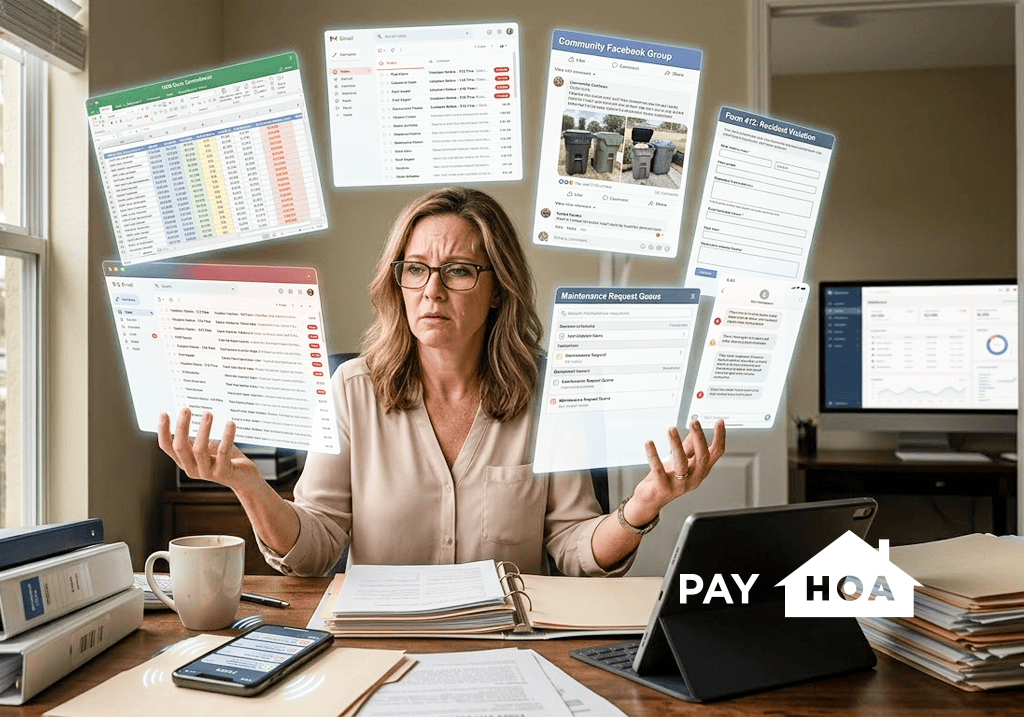
- Managing an HOA often feels like a second, unpaid job. Switching across platforms and software makes that harder.
- Fragmented systems like spreadsheets, email, and Facebook groups create data silos and lead to human error.
- Centralizing operations is a burnout prevention strategy that protects the well-being of volunteer board members.

The Digital Balancing Act
You likely stepped up to serve on your board because you wanted to help your neighborhood. You wanted to ensure the pool stayed clean, the landscaping looked sharp, and the property values remained stable (or even grew). You didn’t sign up to become a human bridge between five different software tools or a part-time IT administrator. Yet, for many board members, HOA management has devolved into an exhausting cycle of software switching and data entry.
You might check one platform to see who paid their dues, then another to track a fence violation. Then you head to your personal email to respond to a resident, only to realize you need to check a third system to see their payment history. This tool sprawl turns a neighborly contribution into a thankless burden.
Many communities attempt to modernize by adding tools for specific problems, for example, a free voting tool, a shared Gmail account, and a new messaging platform. This patchwork approach to homeowners association management creates more work than it saves. You have to remember multiple logins and manually sync information between tools that don’t connect.

The Human Cost of Disconnected Tools
When you spend your limited free time trying to remember which clumsy platform houses which neighborhood task, you have less time to spend where you belong, in your community. Juggling logins and managing redundant data entry is a breeding ground for errors. It’s only a matter of time before siloed data causes a time-consuming problem.
Most volunteers balance heavy duties on top of 40-hour work weeks and family commitments. Late-night board meetings are hard enough without trying to find a specific document buried in a scattered email thread. When the process feels like a second job, people stop volunteering.
Homeowners want simplicity. If they have to log into three different portals to pay a bill, submit a maintenance request, and vote on a board member, they simply won’t bother. They’ll retreat to unofficial channels like Facebook or Nextdoor to voice frustrations.
Disconnected systems also make it difficult to maintain continuity. When a board member steps down, their institutional knowledge often leaves with them. If the records are scattered across various personal laptops and private email accounts, the new board is left starting from zero. This lack of a centralized “home” for community data makes every transition a potential crisis.
Why Patchwork Homeowners Association Management Erodes Trust
Trust is the currency of a successful neighborhood. Scattered conversations are often at the heart of this breakdown. When important decisions happen across Facebook groups, personal email threads, and text chains, things inevitably fall through the cracks, making it impossible to maintain a clear record of how or why a decision was made.
This creates a credibility gap between the board and the homeowners. Imagine a neighbor stops you on the sidewalk to ask about a complaint they filed or a maintenance request. If you have to tell them you will “get back to them” after you make a call to the treasurer and check two different spreadsheets, it looks unprofessional. A lack of immediate, accurate information can make residents wonder if finances are handled correctly.
Inconsistency is another trust-killer. When updates come sporadically because the board is overwhelmed by manual processes, residents feel left in the dark. Transparency is the best antidote to friction. When homeowners can’t easily access financial reports or meeting minutes, they fill that information gap with assumptions and frustration.
Professional-grade documentation is not just for property management companies. Every community deserves a clear, audit-ready trail. A single significant mistake in the books can take months of work to fix and years of effort to rebuild the lost trust.
Reclaim Your Weekends with a Single Source of Truth
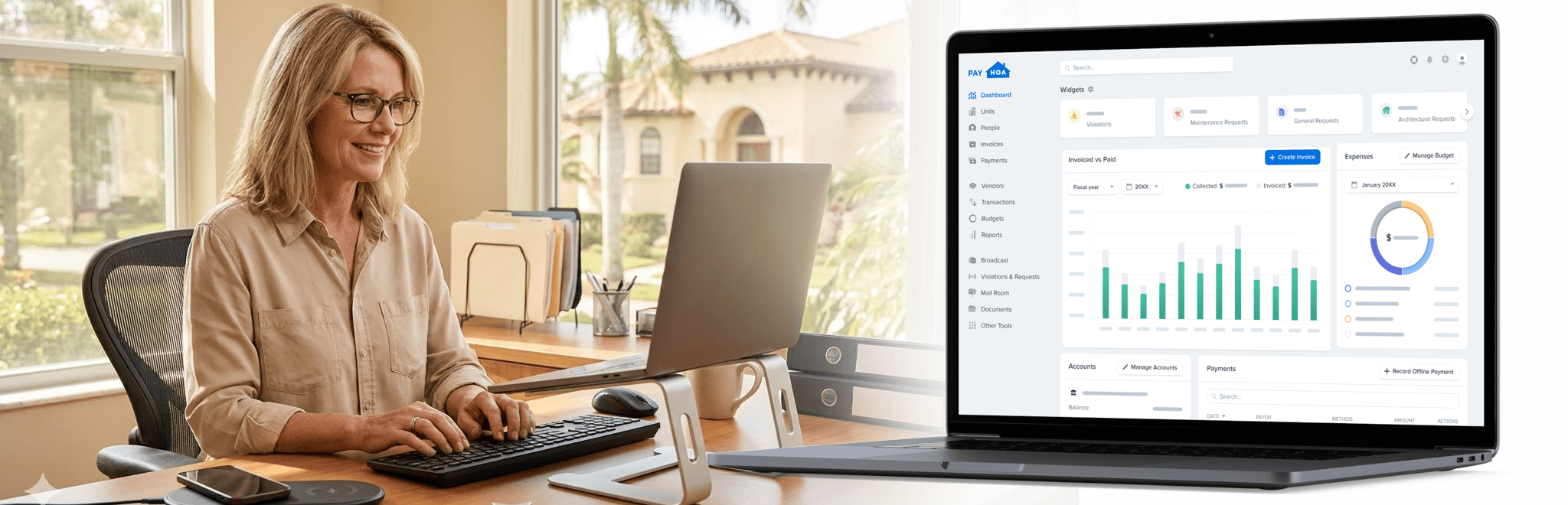
The answer to tool fatigue isn’t more software. It’s better centralization. When you consolidate operations into one platform, you stop switching between disconnected tools and eliminate the manual reconciliation that comes with them. A homeowner’s entire history, from their first payment to their most recent architectural request, lives in one place.
From there, automation does the heavy lifting. Digital payments sync directly with your ledger, so your financial records stay accurate without manual data entry. That’s the real promise of HOA accounting services: less time in spreadsheets, more time on the decisions that actually move your community forward.
Residents notice the difference, too. Owner portals give homeowners a single destination to pay dues, view announcements, and download governing documents on their own schedule. Fewer “quick questions” in your inbox means fewer interruptions on your Saturday morning.
And when it’s time for an audit or a board transition, you’re already prepared. Every invoice, violation notice, and communication record is stored and searchable. You go from being “the person with the spreadsheets” to a strategic leader with the data to back up every decision.
You Deserve Better Tools
Being a board member is one of the most hands-on forms of local leadership. You are essentially running a small municipality with a limited budget and even tighter expectations. To do the job well without losing your mind, you need tools built for the reality of your life. You shouldn’t need a degree in accounting or IT to manage a community.
By centralizing your tools, you can save your association significant money. Some communities save some money by moving from expensive management companies to HOA self-management software. And many management companies use the software to make their services even better.
Self-managed, hybrid, or professionally managed, the most important thing is that communities save the sanity of their volunteers. When the “busywork” is automated, the job becomes manageable again. You can focus on the projects that actually improve the neighborhood, like upgrading the playground or planning the annual block party.
We built our platform because we believe the people who step up to lead their communities deserve better. It turns a thankless burden into a rewarding contribution. It replaces the chaos of scattered platforms and tools with the peace of mind that comes from a single, simple platform. One platform means zero headaches. It means no more hunting for lost emails or apologizing for “getting back to someone” next week. It means being the smart neighbor who has everything under control and getting your weekends back so you can enjoy the community you work so hard to maintain. Sign up for a 30-day free trial to experience the peace of using one tool for all your HOA management tasks.
Share this article:
Enjoyed this Article? Try Another!

Transparency Is the New Standard: Upgrading Your HOA’s Communication and Operations
Key Takeaways If you’ve ever watched an HOA group chat, email thread, or message board…
The State of Community and Association Management: Trends, Regulation, and Technology Shaping the Future
Executive Summary When community leaders are equipped with the right tools and direction, they can…
The Rise of Hybrid Community Management: A Better Way to Run Your HOA
Key Takeaways What is Hybrid Community Management? HOAs have been pushed into an all-or-nothing choice…