
 Earl Laing • 30 Apr 2026 • 15 min read
The Guide to California HOA Laws

Key Takeaways
- California HOAs are governed by the Davis-Stirling Common Interest Development Act (Civil Code §§4000-6150), one of the most detailed and frequently amended HOA statutes in the country.
- AB 130 (signed June 30, 2025, effective immediately) caps most HOA fines at $100 per violation and introduces a new Internal Dispute Resolution (IDR) requirement.
- All director elections and certain member votes must be conducted by secret ballot under Civil Code §5100. Each seat must be elected at least once every four years.
- Effective Jan 1, 2025, electronic voting is available as an opt-in option under AB 2159, but election rules must be amended at least 90 days before use, and paper ballots must be offered.
- Condominium HOAs must be compliant with the wood-supported structure requirements outlined in SB 326 or face fines and potential loss of liability insurance protection.
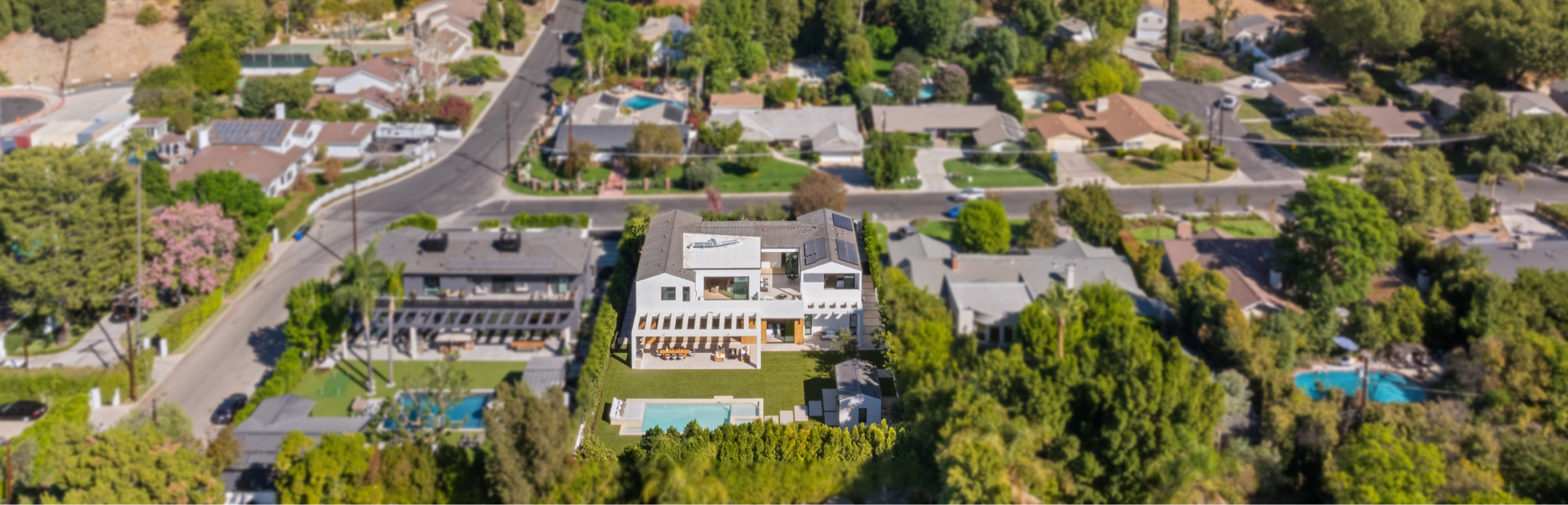
If you’re like most neighbors, you volunteered for your HOA to make your community a better place to live. But if you’re a volunteer in California, you may not have realized that California HOA laws are some of the toughest in the country, and are updated often.
On top of everything else that comes with HOA management, you’ve got to ensure that your board complies with the Davis-Stirling Act and a handful of other bills. Because state law overrides any conflicting HOA-level rules, HOA board members can be held personally liable if the CC&Rs say one thing and the law says another.
We hope this provides a plain-language breakdown of the Davis-Stirling Common Interest Development Act, the governing act for nonprofit HOA elections and board structure (supplemented by the California Corporations Code).
After reading this guide, you’ll be able to understand how to run your HOA board, no law degree required.

The Davis-Stirling Act: A Brief Background
While there have been laws on the books regulating condominium complexes in California since 1963, it took the state legislature longer to address HOAs.
The California state legislature passed the Davis-Stirling Act, which establishes homeowner writers, in 1985, and has amended, revised, and added to it every year since. As it grew more complex, the California Law Revision Commission reorganized and renumbered the Davis-Stirling Act into Civil Code §§4000-6150. The rewrite took effect on January 1, 2014.
The Davis-Stirling Act at a glance
- The goal of the act was to stabilize HOA governance for Californians by creating financial safeguards, disclosures, insurance protection, and reserves.
- The act applies to all common interest developments in California.
- The act is retroactive. It applies to all forms of residential common interest developments in California, including those pre-dating the act’s passage.

What’s New for California HOAs?
The Davis-Stirling Act is amended nearly every legislative cycle, making California one of the most compliance-intensive HOA environments in the country. Here are some of the biggest changes since 2024:
The Davis-Stirling Act
Legislators have made several changes to the Davis-Stirling Act. The most important recent changes for volunteer HOA members to keep in mind include open board meetings, access to records, enforcement, disputes, and collections.
- Open board meetings: Most board meetings must be open to homeowners with advance notice and a posted agenda required. Executive sessions are limited to legal matters, contract negotiations, member discipline, and personnel issues. Actions taken in executive session must be voted on in open session.
- Access to records: Homeowners may request governing documents, financial records, board meeting minutes, and certain other association records. HOAs must respond to records requests within statutory timeframes. For instance, association records prepared during the current fiscal year must be made available within 10 business days following the request.
- Enforcement: AB 130 now caps most fines at $100 and adds requirements for internal dispute resolution (IDR). Boards must provide a written notice of the violation before any fine. Boards are also required to give the homeowner a reasonable opportunity to fix the issue and a right to request a hearing.
- Disputes: Before escalating to litigation, California law encourages the use of IDR and other alternative dispute resolution (ADR) methods. Either party may request IDR. Mediation and arbitration are available before litigation. Small claims court is an option for limited-dollar disputes.
- Collections: HOAs must provide a written pre-lien notice (delinquency notice) before recording a lien for unpaid assessments. Homeowners have a right to request a payment plan before collection action begins. HOAs cannot foreclose solely for fines or attorney fees. Foreclosure requires unpaid assessments and a formal legal process.
What this means for HOA board leadership:
Under the updated Davis-Stirling Act, HOA volunteers have more work. They need systems in place to notify homeowners of meetings and fines so they can meet their legal requirements under the act. HOA boards must also maintain document storage so they can produce up-to-date documents at homeowners’ request.
Using HOA management software simplifies the process of fulfilling these requirements. HOA-specific software like PayHOA offers owner portals, community message boards, document storage, and mass communications tools all in one place.
What this means for homeowners:
For homeowners, more options exist before a dispute reaches a courtroom. The IDR process exists to resolve disagreements at the community level without legal fees on either side. Experts recommend
Further Stirling-Davis Act changes
Two other changes that legislators made to the Stirling Davis Act affect secret-ballot elections and financial disclosures. using it before escalating the dispute.
§5100: Secret Ballot Elections
- Director elections and certain other member votes must be conducted by secret ballot.
- Each director’s seat must be elected at least once every four years.
- Ballots must be counted by an independent inspector of elections in a public, noticed meeting, under sections 5110 and 5120 below.
What this means for HOA board leadership:
You need a private voting system to satisfy this requirement. An electronic voting system, with the option of paper ballots, allows the HOA board to carry out secret ballots.
What this means for homeowners:
Voting in board elections is private by law, and a board cannot use open-voice votes to elect directors. If your community has been skipping formal elections, it may already be out of compliance.
§5310: Annual Financial Disclosures
- The 2025 update requires HOAs to distribute an annual financial disclosure to all members.
- Required disclosures include a pro forma operating budget, reserve funding summary, and insurance summary.
- Disclosures must be delivered 30 to 90 days before the start of the fiscal year.
What this means for HOA board leadership:
Record keeping becomes crucial. If you can’t produce financial documents, you could violate this law. Using HOA software with a document storage function makes it easy to comply.
What this means for homeowners:
Once a year, they’re legally entitled to a full financial picture of your association, including how reserves are funded. If they’ve never received one, they can request it in writing from their board.
Other Updates
HOA Volunteers should also keep an eye on a few other California assembly bills, which hit a number of HOA issues.
AB 130: Fine Cap and Internal Dispute Resolution
This may be the most operationally significant recent change for California HOA boards.
- This bill caps most fines at $100, and it removes several enforcement tools that associations have traditionally relied on.
- It introduces a new IDR requirement, though the statute is ambiguous about whether IDR is now mandatory for both parties.
- Enforcement uncertainty remains high in 2026 as boards, attorneys, and courts work through the ambiguity.
What this means for HOA board leadership:
It’s still too early to say what the ultimate outcome of the IDR requirement will be. Consult an experienced California HOA attorney if you have questions.
What this means for homeowners:
On the face of it, this law is good news for homeowners. Most fines will now be $100, and the IDR requirement offers a formal dispute path before things escalate to the courtroom. However, this law is still being interpreted, so HOA members should seek guidance from a California HOA attorney.
AB 2159: Electronic Voting
Electronic voting is an option, but not yet mandatory.
- It allows opt-in electronic voting for director elections and governing document amendments.
- Assessment votes are excluded from electronic voting.
- Election operating rules cannot be amended within 90 days of an election under Civil Code section 5105, so rule changes that enable electronic voting have to be adopted well ahead of the cycle.
- Paper ballot alternatives must still be offered to all members.
What this means for HOA board leadership:
Compliant electronic voting requires you to be able to notify people of updated election rules. HOA software with mass communication capabilities and digital surveys lets you do both with one tool. These rules are codified at Civil Code section 5115.
What this means for homeowners:
An HOA board can now offer digital voting for elections, but only after formally updating its election rules with proper notice. Homeowners still retain the right to vote by paper ballot.
AB 2460: Quorum Rule Changes
- If the initial quorum is not reached, a reconvened meeting held at least 20 days later requires only 20% of the membership, or less if the governing documents allow.
- The board must issue notice for the reconvened meeting 15 days in advance.
What this means for HOA board leadership:
This is good news for HOA boards, it means that quorum numbers aren’t as difficult to achieve. And one way to boost attendance is to implement HOA software that lets you send mass communications, so homeowners know when meetings are scheduled and how to stay involved when they can’t attend.
What this means for homeowners:
Boards that have historically struggled to hit quorum now have a workable path forward. This reduces the risk of stalled elections and deferred governance decisions that affect the whole community.
SB 428: Harassment Protections for HOA Managers and Staff
- The law expands harassment protections to include HOA managers and community association staff.
- It allows restraining orders in cases involving threats, repeated disturbances, or intimidation directed at management personnel.
What this means for HOA board leadership:
This rule aims to create a more civil, harmonious environment for those who work for the HOA. Hopefully, it will encourage homeowners to be more courteous to volunteers, too.
What this means for homeowners:
Hostile or threatening conduct directed at a property manager or HOA staff will no longer be tolerated. While homeowners in California have more rights than in many other states, they do not have the right to harass their neighborhood volunteers.
How California HOA Elections Work
The Davis-Stirling Act sets out how a California HOA has to run a director election, start to finish. Section 5100 above sets the secret ballot requirement. These four sections cover the rest of the mechanics, and they apply whether or not your governing documents mention them.
§5103: Election by Acclamation
If the number of qualified candidates is not more than the number of open seats as of the nomination deadline, the association may declare those candidates elected by acclamation instead of holding a vote. The inspector of elections makes that determination. Acclamation is only available if the association held a regular director election within the last three years and gave individual notice of the election and the nomination procedure, beginning at least 90 days before the nomination deadline. The statute sets additional conditions, so review it in full before relying on this.
What this means for HOA board leadership:
An uncontested election does not have to mean a full ballot cycle. If you meet the conditions, acclamation saves the notice, printing, and counting work entirely. The catch is that the 90-day notice requirement means you have to plan for acclamation before you know whether you will need it.
What this means for homeowners:
If no more people run than there are seats, the board can seat them without a vote. That is legal, but only when the association has kept up with regular elections and gave you proper notice and a real chance to be nominated.
§5110: Inspector of Elections
The association must select one or three independent third parties to serve as inspector of elections. An inspector may be a member of the association, but may not be a director, a candidate for director, or a relative of either. An inspector also may not be anyone currently employed by or under contract to the association for any other paid service. The statute names a volunteer poll worker with the county registrar of voters, a licensee of the California Board of Accountancy, and a notary public as examples. The inspector determines who is entitled to vote and the voting power of each membership, rules on proxies, receives ballots, hears and determines challenges connected to the right to vote, counts and tabulates the votes, determines when polls close, and determines the results.
What this means for HOA board leadership:
If your board has been counting its own ballots, that is not permitted in California. Appoint the inspector before nominations open and publish who it is. Naming a neutral counter in advance removes the most common objection raised after a close election, and it takes the job off your volunteers.
What this means for homeowners:
Your ballot is counted by someone who is not running and does not sit on the board. If you have a question about eligibility or how a ballot was handled, the inspector decides it, not the board.
§5115: Notice, Ballots, and Confidentiality
Section 5115 sets the election calendar and the ballot procedure. The association must give general notice of the nomination procedure and deadline at least 30 days before that deadline. At least 30 days before ballots go out, it must give general notice of the ballot return date, time and address, the electronic ballot deadline and instructions if electronic voting is used, the date, time and location of the meeting where quorum is determined and ballots are counted, and the full list of candidates. Ballots and two preaddressed envelopes must be mailed first class or delivered at least 30 days before the voting deadline. The voter may not be identified by name, address, or lot, parcel, or unit number on the ballot itself. The association must follow the confidentiality method California counties use for vote by mail: the unsigned ballot goes into a sealed envelope, that envelope goes into a second sealed envelope, and the voter signs the second envelope and notes the address or interest that entitles them to vote. The second envelope is addressed to the inspector of elections.
What this means for HOA board leadership:
Everything in your election calendar keys off these 30-day windows, so build the timeline backward from the meeting date before you announce anything. The two-envelope method is what keeps the ballot secret while still letting the inspector verify who sent it, so do not shortcut it by having owners sign the ballot.
What this means for homeowners:
You should receive at least 30 days’ notice before nominations close and another 30 days before ballots arrive. Your ballot is not signed and cannot carry your unit number, so no one on the board can connect your vote to you.
§5120: Counting the Ballots in Public
Votes must be counted and tabulated by the inspector of elections, or the inspector’s designee, in public at a properly noticed open meeting of the board or the members. Any candidate or any other member of the association may witness the counting. No one, including a board member or an employee of the management company, may open or review a ballot before that meeting. The inspector may verify the member’s information and signature on the outer envelope beforehand. Once the inspector receives a secret ballot it is irrevocable. The tabulated results must be promptly reported to the board and recorded in the minutes.
What this means for HOA board leadership:
The count is a noticed public meeting, not an administrative task you finish at the kitchen table. Put it on the calendar with the rest of the election timeline and let candidates know they are welcome to send someone to watch.
What this means for homeowners:
You can attend the count. If you want to see how the election was decided, you do not need permission and you do not have to file a records request.
How PayHOA Helps California HOAs Stay Compliant
The right HOA software can help boards keep compliant with California’s evolving laws without hassles or headaches. Where generic tools, like your shared spreadsheet or QuickBooks, help with some aspects of finances, it takes HOA-specific tools like PayHOA to help you meet your obligations under the law. Here are some ways PayHOA specifically helps with compliance in California.
- Violation tracking and notice delivery: Under the Davis-Stirling enforcement process and AB 130 updates, HOAs must provide written notice of any violation before issuing any fine. PayHOA’s violation tracking and notice delivery offer a record of the violation and notification of its delivery.
- Digital document storage and member records access: The law allows homeowners to request up-to-date documents on legally mandated timelines. PayHOA’s comprehensive document storage makes it simple to upload and access essential documents like meeting minutes, bylaws, and historical financial records.
- Online voting tools: PayHOA offers compliant electronic voting solutions with fully customizable question-and-answer fields, so they adapt to your neighborhood.
- Financial reporting and reserves disclosure: Simplify your financial reporting requirements with PayHOA. Generate reports to comply with the Davis-Stirling Act and keep homeowners up to date on the association’s finances.
- Bookkeeping and collections workflow: If you’re not an expert at bookkeeping, PayHOA has you covered. Our bookkeeping-as-a-service provides the support you need to maintain financial records and stay compliant with best practices.
- Mass communications and meeting notices: Notifying homeowners about board meetings doesn’t need to be difficult. With PayHOA, you can send mass communications and meeting notices, so everyone can stay in the loop.
When State Law and Your Governing Documents Collide
When your governing documents diverge from California state laws, California laws supersede. Any provision in your CC&Rs, bylaws, or articles that conflicts with Davis-Stirling or another California statute is void and unenforceable. It doesn’t matter if it’s been on the books for decades.
Board members are legally responsible if they knew about a conflict between state law and the governing documents. Refer to the full text of the Davis-Stirling Act as a starting point for research.
For enforcement decisions or legal disputes, always verify current statute text at leginfo.legislature.ca.gov and consult a California-licensed HOA attorney. AB 130 in particular is still being interpreted in early 2026, and summaries, including this one that was drafted with AI assistance and reviewed by our team, are not legal advice.
Want to simplify Davis-Stirling Act compliance with HOA management software? Learn how PayHOA can help you.
Share this article:
Enjoyed this Article? Try Another!
HOA Special Assessments: When They’re Necessary and How to Communicate Them Without Losing Trust
Key Takeaways An HOA special assessment is a one-time charge to owners when the association…

What Is a Convenience Fee? Surcharges and Convenience Fees Explained
Key Takeaways It’s a fair question, and the answer depends on which charge you’re talking…

The Guide to Tennessee HOA Laws
Key Takeaways Serving on a Tennessee homeowners association board, you’re used to being the last…