
 Jesse Hitt • 30 Dec 2025 • 6 min read
Understanding HOA Financial Reports
Key Takeaways:
- Financial reports keep an HOA transparent, compliant, and steady, even when board members are learning on the job.
- The three reports every board should understand are the balance sheet, the income statement, and the budget variance report.
- With the right tools and support, you can produce clean, audit-ready reporting without living in spreadsheets.

Why Financial Reports Are the Invisible Backbone of Your Community
If you’ve ever looked at your HOA’s financial statements and wondered whether everything is actually in order, you’re not alone. Community leadership is hands-on work, and finances are often the most challenging part to manage. That’s why many communities turn to HOA accounting software and services, not because they want more complexity, but because they want clarity.
Managing your HOA’s finances doesn’t have to be overwhelming when the board understands what each report is meant to show and your transactions are recorded consistently. Financial reports are your map for community health: they show whether cash is stable, whether spending matches the plan, and whether collections are on track.
Demystifying the Big Three: Your Core Financial Documents
You don’t need to audit every transaction to lead responsibly. Most boards can oversee the association’s financial health by reviewing three reports monthly and asking repeatable questions.
The Balance Sheet: Snapshot of Financial Health
A balance sheet shows your association’s financial position at one point in time, usually at the end of the month. It follows a simple equation: assets equal liabilities plus equity (often called fund balance in an HOA).
Assets are what the HOA owns, with the most important being liquid accounts like checking, savings, and reserves. Liabilities are what the HOA owes, such as vendor bills or prepaid assessments recorded before they are earned. Equity is the difference, reflecting the community’s accumulated position.
When you review this report, look for surprises: a cash drop without an obvious reason, liabilities that grow every month, or reserves that don’t match what the board expects.
The Income Statement: Money In Versus Money Out
An income statement (often called a Profit and Loss statement) covers a timeframe like a month or year to date. It shows the flow of money: revenue in and expenses out.
Revenue includes assessments, special assessments, late fees, and interest. This report is easier to trust when invoicing is tied to consistent revenue categories from the start. Expenses include operating costs like landscaping, utilities, insurance, repairs, and professional fees. If invoices are entered late or coded inconsistently, the report can appear healthier than it actually is. Many boards rely on HOA accounting tools to maintain consistent categories and reduce manual errors.
The Budget Variance Report: The Accountability Check
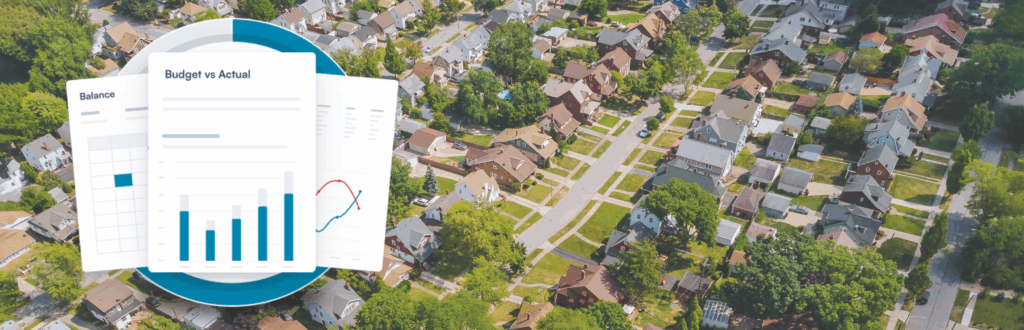
A budget variance report compares actual results to the approved budget. It shows where you are over or under plan, line by line.
This is the report that turns “we spent money” into “we spent money the way we said we would.” If a line item is meaningfully off, the board should be able to explain why. Overages might reflect an approved scope change, a seasonal swing, or an urgent repair. Shortfalls may indicate a problem with billing timing or collections. The board’s job is to spot the variance, understand it, and document what changed.
One practical approach is to set a simple “investigate” threshold. For example, you might discuss any variance over a set dollar amount or any category that is over budget by a certain percentage. The number matters less than the habit: pick a rule, apply it consistently, and record decisions so next month’s board meeting starts ahead of the curve.
Beyond the Basics: Other Important Documents
Once the big three feel familiar, these reports help you confirm accuracy and diagnose problems quickly.
Bank Reconciliation Reports
Bank reconciliation compares your bank balance with your general ledger balance to confirm that all deposits and payments are accounted for. It is where errors first appear: missing deposits, duplicate entries, or timing issues.
If your records are organized using an HOA chart of accounts, reconciliation is easier because transactions map into clear buckets. Many communities use platforms like PayHOA for this step, as our built-in reconciliation tools and optional bookkeeping support make it easier to stay audit-ready without the manual grind.
General Ledger
The general ledger is the master list of transactions, organized by account within your HOA chart of accounts. You won’t read it line by line in meetings, but it matters because every other report pulls from it.
When a category looks off on the income statement, the ledger tells you what happened: which vendor, which invoice, and which account. A clean ledger also supports clean HOA accounting services and reduces the pain of board transitions.
Accounts Receivable Aging Report
An accounts receivable aging report shows what homeowners owe and how long balances have been outstanding. It is both a cash-flow report and a consistency report.
If delinquency rises, the HOA may postpone projects or scramble to pay vendors. If a few accounts are consistently late, the board can apply its collection policy consistently (and document its actions).
A Monthly Reading Routine that Saves Time
Use this quick routine to keep meetings focused and to prevent surprises:
- Start with the balance sheet and confirm that operating cash and reserve cash look reasonable compared to last month.
- Scan the income statement for missing revenue categories and unusually high expenses.
- Review the budget variance report and choose the top three variances to discuss and document.
- Confirm bank reconciliation is completed and dated for the month.
- Check the receivables aging report for trends, not just totals.
Tools like PayHOA make this routine easier by keeping billing, payments, and reporting connected in one place, so you’re not hunting across spreadsheets every month.

HOA Accounting Services and a Modern Solution for Simple Reporting
Whether you’re juggling board duties alongside a full-time job or modernizing outdated processes, financial reports are your map for community health. You need a single, reliable source of truth that connects billing, payments, expenses, and reporting.
Clean reports depend on clean inputs: consistent invoicing categories, vendor expenses coded correctly, and reconciliations completed on schedule. When those processes are automated or handled by professionals, financial reporting becomes routine rather than reactive.
That’s where PayHOA comes in. You get professional-grade accounting out of the box, simple bank reconciliation, intuitive reporting, and automated late fees and autopay. For associations that want expert support beyond software, our bookkeeping services can take the detailed work off your plate entirely. The goal is straightforward: eliminate the busywork so your board can focus on the bigger picture.
Conclusion
Understanding HOA financial reports is a leadership skill, not an accounting credential. Clear financial reports help boards make better decisions, and they build trust with homeowners who want to know their money is being managed responsibly.
When the board consistently reviews the right documents, the community benefits from clearer decisions and stronger trust. With the right tools and (when needed) extra accounting support, you can manage with clarity and lead with confidence.
Share this article:
Enjoyed this Article? Try Another!

HOA Accounting Basics: How to Read Financial Statements, Reconcile Accounts, and Build Report Packets
Key Takeaways Most volunteer board members inherit a financial system with no documentation, no training,…

The Guide to Indiana HOA Laws
Key Takeaways Indiana HOA laws changed more in the 2026 legislative session than in the…

How to Transition Your HOA From a Management Company
Key Takeaways Many community boards decide to self-manage, then stall on the logistics. This guide…