
 Jesse Hitt • 22 Jan 2026 • 6 min read
Beyond the Sign-Up Sheet: How HOA Software Can Simplify Amenities Scheduling
Key Takeaways
- Manual scheduling fuels volunteer burnout and resident friction, especially when double-bookings turn into “he said-she said.”
- HOA software lets residents reserve amenities through a self-service portal, saving the board hours of coordination.
- Automated rules, such as limits and quiet hours, support fair access and help keep enforcement from feeling personal.
- Digitizing everyday interactions builds trust and makes the community feel easier to live in.

The Calendar Problem Nobody Signed Up For
Most boards adopt HOA Software to reduce loose ends. They want one place for documents, dues, and announcements. But it’s not always the big stuff that bogs you down.
What catches many communities off guard is that daily stress often comes from something smaller than budgets or bylaws. It comes from the pool calendar, the clubhouse key, and the sign-up sheet taped to a wall.
Amenities scheduling sounds simple until you’re the one managing it. A resident wants the pavilion for a birthday party. Another resident swears they already booked it. Someone else wants to know why the pool is closed on Tuesday. Before you know it, some poor volunteer is spending lunch breaks sorting through email threads just to answer a question for which the answers should have been easy to find.
Let’s talk about how moving scheduling to a digital system reduces disputes, lowers the mental load on volunteers, and gives residents the autonomy they expect.

The Hidden Headache of Manual Scheduling
Community management is rarely part of a board member’s title. You might be a treasurer or secretary, yet your week turns into customer support and conflict mediation. The community calendar sits at the center of that reality because it involves two things people care deeply about: time and fairness.
Manual systems fail in predictable ways. Paper sheets are outdated the moment someone forgets to update them. Shared spreadsheets create confusion when multiple people edit the same file. Email chains multiply, then someone forwards the wrong thread. Verbal agreements create the worst kind of conflict because nobody can prove what was said.
Maybe you have a dependable, caring volunteer who knows homeowners expect answers. That probably means they’re replying after dinner and checking calendars before work. Over time, coordination becomes a constant background task, the board role feels endless, and even the most dedicated volunteer starts looking for a better way. The fix isn’t finding a different person. It’s fixing the process: fewer handoffs, fewer slip-ups, and a system that runs consistently without burning anyone out.
How HOA Software Makes Self-Service Scheduling Possible
The fastest way to reduce scheduling drama is to remove the manual bottlenecks. Modern portals let residents serve themselves while the platform enforces rules in the background.
A homeowner logs in, checks availability, and reserves the amenity. The system records the reservation and sends confirmation right away. It sends reminders as the date approaches, which reduces no-shows and last-minute confusion. When someone asks who booked the clubhouse, the answer is on the calendar, not buried in a volunteer’s inbox.
This shift matters because it makes scheduling a more predictable experience. Residents know where to go and what to expect. The board knows the system will consistently track activity, even when volunteers are busy or out of town.
Here are the practical building blocks that make amenities scheduling work:
- A live calendar that residents can view before they request anything
- Automated confirmations and reminders that reduce “Did you get my email?” follow-ups
- Clear booking rules that apply evenly, like limits per household or blackout dates for maintenance
- A searchable record that helps resolve disputes quickly and calmly
When those pieces are in place, volunteers spend less time coordinating, and residents spend less time waiting.

Why Resident Empowerment Matters
Residents want autonomy. That might mean reserving the clubhouse for a graduation party, grabbing a tennis court slot, or booking a community room for a committee meeting. Self-service scheduling gives residents control, which reduces frustration.
It also changes the tone between homeowners and the board. Instead of asking a volunteer to approve a reservation, residents follow a clear process available at any time. That alone reduces impatient messages and last-minute scrambling.
Fairness is the other half of empowerment. Rules matter most when demand is high. Think summer weekends, holiday gatherings, and peak pool season. Built-in limits can prevent one household from monopolizing prime slots. They can also protect quiet hours, limit guest counts, and require buffer time between events.
When the system enforces rules consistently, enforcement no longer feels personal. The board is not picking favorites. The policy is the policy, and everyone can see it.
Consistency also supports risk management. Common areas come with expectations around safety and documentation. Your association should get legal guidance for its specific circumstances, but the practical takeaway is universal: clear rules and reliable records reduce uncertainty and legal liability when questions arise.
Real-World Use Cases: Pools, Plots, and Pavilions
Amenities scheduling is not a luxury feature. It touches the parts of community life where emotions run high and misunderstandings happen fast. Three scenarios show why digitizing the process makes a difference quickly.
Summer Pool Scheduling
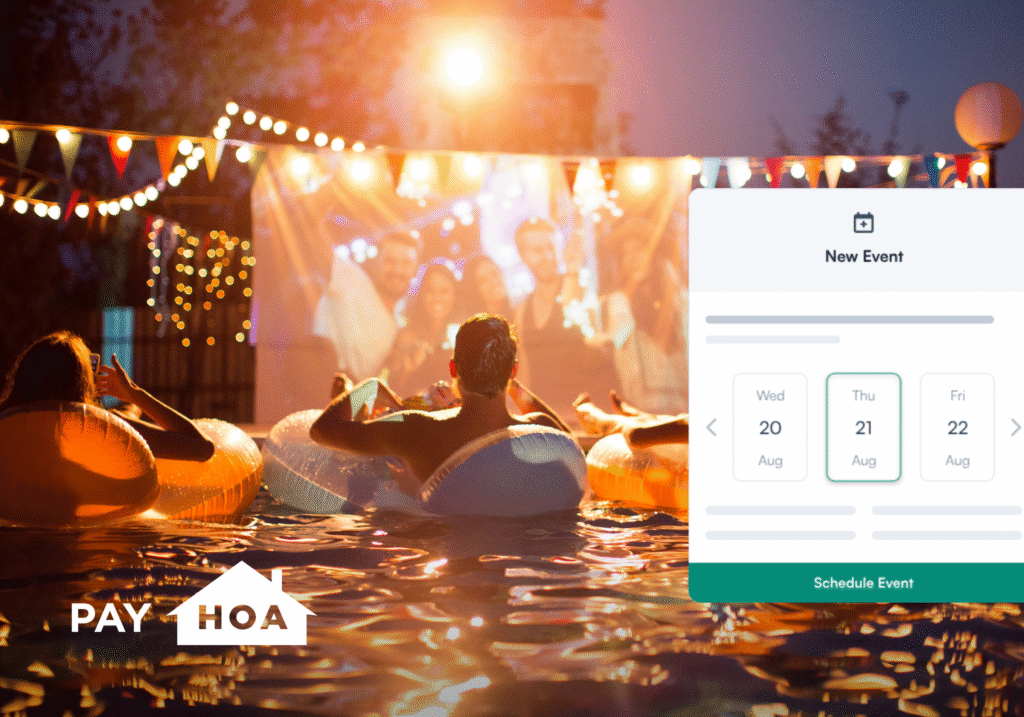
Pools create joy, and they also create pressure. Residents want to know hours, guest rules, and whether lap swim blocks are protected. With HOA software managing the calendar, you can publish swim schedules, define lane-reservation rules, and post maintenance closures. When information is visible and consistent, fewer people show up frustrated.
Community Garden Plots
Garden plots look straightforward until you track assignments across seasons. Someone forgets to renew, another resident wants the same plot, and a volunteer ends up digging through old notes. A digital workflow can document who has which plot, send renewal reminders, and track waitlists without the need for spreadsheets. It also makes volunteer transitions easier, since the system holds the history.
Clubhouse Events With Built-In Accountability
Clubhouses tend to cause the most friction. A good scheduling tool lets you set the rules up front: deposit requirements, guest limits, noise expectations, and cleanup checklists. Residents agree before they book. And if something goes wrong, the board has a clear record of what was agreed to and when. That makes follow-up conversations easier and more factual.
For boards refining amenity rules, it helps to learn from industry best practices. The Community Associations Institute resource, Implementing HOA and Condo Clubhouse Policies, offers practical guidance on setting expectations, communicating rules, and reducing conflict in shared spaces.
A Better Way Forward For 2026
If your community still runs amenities on paper, you are carrying administrative weight that technology can remove. Digital scheduling improves daily life by reducing uncertainty. Residents get fast answers and fair access. Volunteers get fewer interruptions and fewer disputes.
The win is peace of mind and a cleaner workflow that does not rely on heroic effort. Both outcomes make the board role more sustainable, which is important in communities where recruiting volunteers is challenging.
Ready to put amenities scheduling on autopilot? Start your free trial and see how PayHOA can help.
Share this article:
Enjoyed this Article? Try Another!

HOA Voting Rules Every Board Should Know
Key Takeaways HOA voting rules come from two places: your state laws and your governing…
HOA Special Assessments: When They’re Necessary and How to Communicate Them Without Losing Trust
Key Takeaways An HOA special assessment is a one-time charge to owners when the association…

What Is a Convenience Fee? Surcharges and Convenience Fees Explained
Key Takeaways It’s a fair question, and the answer depends on which charge you’re talking…