
 Jesse Hitt • 12 Feb 2026 • 7 min read
The Rise of Hybrid Community Management: A Better Way to Run Your HOA
Key Takeaways
- Hybrid management eliminates the choice between full self-management and expensive outside firms.
- Technology and experts share the load so boards can focus on governance instead of routine tasks.
- Communities pay only for what they need, avoiding full-service management overhead.
- Everyone benefits with less burnout for boards, better service for homeowners, and smoother operations overall.

What is Hybrid Community Management?
HOAs have been pushed into an all-or-nothing choice for community association management. Boards have to decide whether to take on the heavy load of total self-management or accept the high cost and loss of autonomy that come with most traditional full-service property or association management companies. For many communities, neither option is a truly perfect fit, and the hybrid model offers an attractive new option for a practical middle-ground approach. Instead of boards sacrificing control or assuming overwhelming workloads, hybrid management is structured to distribute tasks more efficiently.
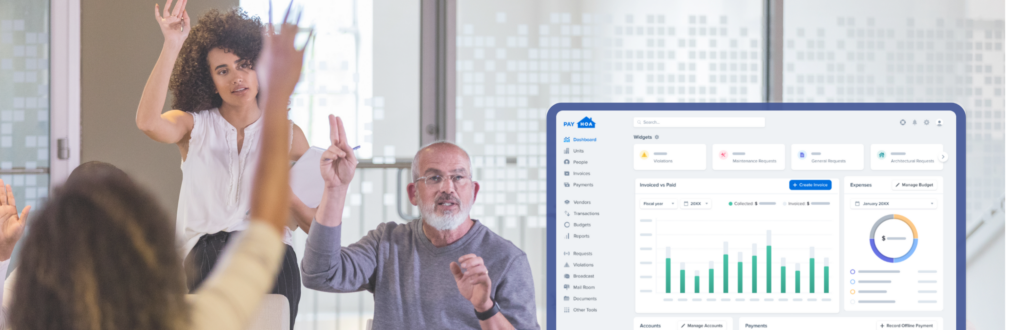
Hybrid community management blends professional services like bookkeeping, tax filings, banking, and resale documents with software automation. The goal is simple: provide expert support and services for time-consuming or complex tasks while providing tools that help you manage your other responsibilities and maintain governance. This model allows communities to strategically divide responsibilities between professionals, technology, and volunteer boards. This results in a system that is both practical and adaptable.
This model aligns resources with community demands and replaces the rigid, one-size-fits-all approach of traditional community management. It is particularly well-suited for small- to mid-size HOAs that want to move beyond self-management without committing to an outside property management company. Board members remain informed and in control while the time-consuming routine administrative work that often burdens them is handled through professional services and intuitive software.
PayHOA’s Hybrid Community Management Model
Hybrid management loosely follows the 80/20 Rule, which says that 80% of results can be tracked back to just 20% of your efforts. The rest is often necessary but tedious busywork.
On the other side of the coin, you can reduce the 80% busy work to about 20% of the cost through automation and managed services. While automation and software often get the spotlight, it’s really our dedicated services and support that form the foundation of this comprehensive management model.
By identifying the tasks that consume the most time, yet require specialized expertise, such as bookkeeping, financial reporting, or compliance documentation, communities can focus their efforts where volunteers add the most value.
This approach allows communities to focus on what they do best, while a combination of software, experts, and professionals handle the rest. Hybrid management gives you peace of mind by providing expertise, resources, and flexibility. Boards gain confidence knowing that essential processes are handled correctly while still keeping the authority to guide decisions, priorities, and long-term planning.
Hybrid management can also save communities money. Communities can avoid paying full-service management fees for tasks that volunteers (or software) can handle, while still retaining professional support during critical times or needs. This targeted use of resources can reduce overhead, minimize inefficiencies, and ensure budgets are spent intentionally and only where value can be added back to the community. Over time, this often leads to substantial, long-term savings without sacrificing quality. It is a way to harness emerging technology without losing the human touch that communities want from HOA board members.
How Hybrid Management Supports Communities
Boards that adopt a hybrid management model gain access to services, support, and tools that make running a community easier and more manageable while also cutting costs. By combining expert services and support with modern technology, hybrid community management creates a more efficient system that adapts to your community’s actual needs rather than forcing boards into a one-size-fits-all approach. Instead of piecing together multiple systems or using outdated processes, communities gain experts and a streamlined platform with many benefits. These benefits include:
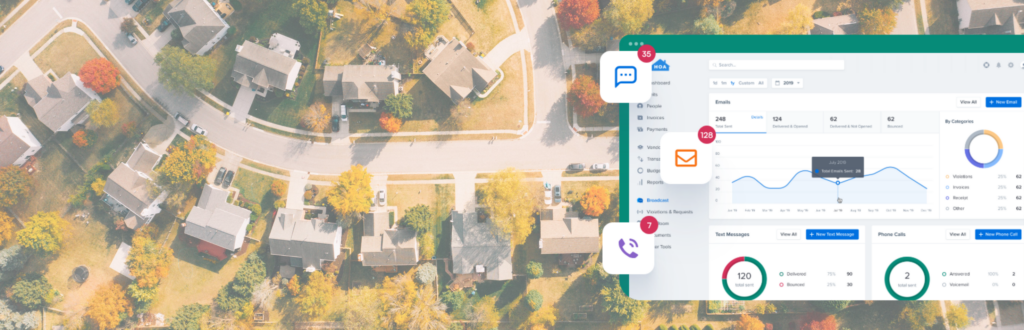
- Automated invoicing and online payments: Eliminate manual dues collection with automatically generated invoices and secure online payment options for residents. Homeowners can pay electronically, reducing late payments while removing the need for boards and volunteers to chase checks, handle cash, or track paper records.
- Built-in accounting and reconciliation tools: Maintain up-to-date transparency when managing HOA finances with integrated accounting and bank reconciliation tools. Boards can monitor balances, transactions, and budget performance in real time without relying on a costly outside CPA or complicated spreadsheets for routine tasks.
- Communication suite: Centralize resident communication on a single platform, including email, text messaging, newsletters, and mass mailings. This creates consistent messaging, faster responses, and higher community engagement without juggling multiple tools or disconnected, convoluted systems.
- Resale documents: Offload time-consuming and compliance-heavy resale document preparation to PayHOA. This reduces risk, increases accuracy, and frees board members from one of the most intensive administrative responsibilities in HOA management.
- Vendor management and digital payables: Easily store vendor records, track work orders, approve invoices, and pay bills from a single system. This keeps financial and operational information organized, searchable, and transparent while simplifying coordination with vendors and service providers.
- Professional reporting: Generate clear and professional financial statements, budgets, and reports with a few clicks. These reports support confident board decision-making while providing residents with transparency into community management and decision-making rationale.
- Bookkeeping support: PayHOA’s bookkeeping service provides an affordable, simple way to handle your accounting needs. Our service helps keep financial records accurate, compliant, and audit-ready without hiring outside staff or relying on an overworked or underskilled volunteer board member.
Community associations are growing in size and complexity. That’s why efficient management is essential. Hybrid community management supports consistent governance, reliable operations, and higher community standards by providing the right expertise and tools to keep associations running smoothly.
Why it Works
Hybrid community management works because it strikes a balance between a traditional approach and modern, cost-effective solutions. Combining in-person oversight with virtual tools allows board members to avoid the burnout that often comes with the full-time, hands-on responsibilities of self-management. This model maintains visibility and control over operations while sharing responsibilities with volunteers who can step in when needed.
The flexibility of a hybrid approach allows boards to maintain a strong presence without being overwhelmed by the daily demands and routine tasks of community management. This makes the hybrid approach a sustainable solution for communities of all sizes. By delegating responsibilities more effectively, communities can focus on specific needs and long-term planning rather than being consumed by repetitive tasks and administrative work.
Homeowners benefit from this model, too. They receive professional service without the inflated fees that come with traditional, full-service management firms. Instead of paying for full-time management that feels detached and distant from the community, boards can access support when necessary and save money along the way.
The hybrid model offers a more personalized experience at a lower cost. This change helps cultivate well-maintained communities able to address issues promptly and effectively. This flexibility also enhances service adaptability and helps communities manage obstacles as they arise. Ultimately, homeowners get the attention and care they deserve at a lower cost than traditional models.
The hybrid approach leverages technology and expertise to enhance communication, improve decision-making, and streamline operations. Boards and residents can access real-time updates, track project progress, and collaborate more effectively without the overhead costs and delays associated with off-site management. Hybrid community management leads to healthier, more engaged communities where volunteer boards and residents feel mutually supported. When technology and professional services work together in this way, communities gain a reliable structure that continues to evolve alongside their needs.
Give hybrid community management a try with a 30-day free trial of PayHOA.
Share this article:
Enjoyed this Article? Try Another!
The State of Community and Association Management: Trends, Regulation, and Technology Shaping the Future
Executive Summary When community leaders are equipped with the right tools and direction, they can…

Reclaim your time: 5 ways to save 10+ hours with HOA management software
Key Takeaways The hidden cost of volunteer leadership No one signs up to manage an…

Beyond the Sign-Up Sheet: How HOA Software Can Simplify Amenities Scheduling
Key Takeaways The Calendar Problem Nobody Signed Up For Most boards adopt HOA Software to…