How Wilsonville Meadows Turned Conflict Into Community
See how an Oregon HOA left its management company, grew reserves to 150% of target, and improved neighbor relationships with PayHOA.

At a glance
- Client
- Wilsonville Meadows HOA
- Location
- Wilsonville, Oregon, USA
- Community
- 309 single-family homes, incorporated in 1990
With PayHOA, Wilsonville Meadows has been able to:
- Switch to self-management, eliminating management taking up 70% of their budget
- Grow reserves to 150% of their target in 18 months, from $18,000 to over $160,000
- Collect 100% of annual dues within two months, the fastest in the HOA's history
- Cut architectural review turnaround from three weeks to under 48 hours
Summary
For years, Wilsonville Meadows HOA partnered with a property management company that left homeowners frustrated and its budget stretched thin. A new board took over specifically to end that relationship. After evaluating other management companies and working with a bookkeeper, they found PayHOA. The result: a self-managed community with lower costs, faster approvals, and money left over to reinvest back into the neighborhood.
A caring community with a management problem
Wilsonville Meadows sits in Wilsonville, Oregon, a Portland suburb known locally as the “Silicon Forest” for its greenery and tech workers. Incorporated in 1990, the neighborhood’s 309 single-family homes are split between original owners (aged 60+) and young families drawn by nearby schools. It’s a close-knit place where neighbors know and look out for one another.
From 1990 to 2024, the HOA relied on a property management company. By the end, the relationship had turned costly and combative. They were spending 70% of their budget on the management company, which sent homeowners adversarial, inaccurate compliance letters claiming neighbors had reported them for violations. The company also let a city-reported irrigation leak run for six weeks before addressing it, a delay that cost the HOA nearly $2,000.
Kristin Roche, now HOA President, and three other volunteers stepped up to board positions specifically to solve the problem, including ending their contract with the management company. Their initial plan was to transition to a new company, and they collected bids from seven replacement firms, ranging from $1,800 to $3,500 a year not including per-item fees, such as $35 for every compliance letter. For an HOA known for keeping dues low at just $230 annually, those costs would limit what they could do for the community. Instead of hiring another firm, the board tried self-managing with an outside bookkeeper.
But the bookkeeper still felt costly for an HOA with only a handful of invoices to pay each month, and it took up much of the board’s time. And, unfortunately, the problem went beyond bookkeeping. HOA records were scattered across a shared drive with inconsistent permissions and no paper trail, and the board juggled separate tools for communications, meetings, and signatures, with Mailchimp, Zoom, and SignNow all in the mix. After about six months, the board started looking for dedicated software that could bring it all together.
A unanimous vote to switch
The board’s Treasurer, Cole, researched PayHOA alongside a competitor. The tipping point was PayHOA’s ability to support not only accounting, but also the work of their separate software systems. After a round of demos, the board voted unanimously to switch.
The move to PayHOA was “very easy,” Kristin said. The board imported its financial history directly from QuickBooks and got quick answers from PayHOA’s support team on the handful of questions that came up along the way.
Faster approvals, faster dues collection
The results showed up fast. In its first year on PayHOA, all 309 homes paid their annual dues within two months, the fastest full collection the HOA has ever had. In past years, 5 to 10% of homeowners had missed the deadline. Automatic reminders and PayHOA’s handling of the community’s required annual mailing did the heavy lifting. “It was huge, no more envelope stuffing,” said Kristin. “We didn’t have to manually do all of that ourselves.”
Architectural review requests, once a three-week wait, now get board approval in 24 to 48 hours. One homeowner who replaced all their windows received their approval the same day.
The time savings extend to the treasurer’s calendar. With the HOA’s bank account connected directly in PayHOA, Cole can now manage the finances without paying an outside expert. He no longer spends hours reconciling entries with a bookkeeper or tracking down where a transaction went.
“It saved him a lot of time with the bookkeeper,” Kristin said. “It was so much back and forth, and now it’s just so much easier.”

Turning savings into a more beautiful neighborhood
With costs down significantly from the 70% of their budget they used to spend on a management company, Wilsonville Meadows built its reserves to 150% of their target, going from $18,000 to more than $160,000 in just 18 months.
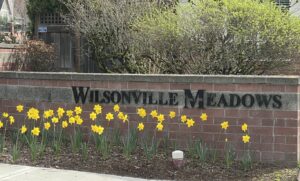
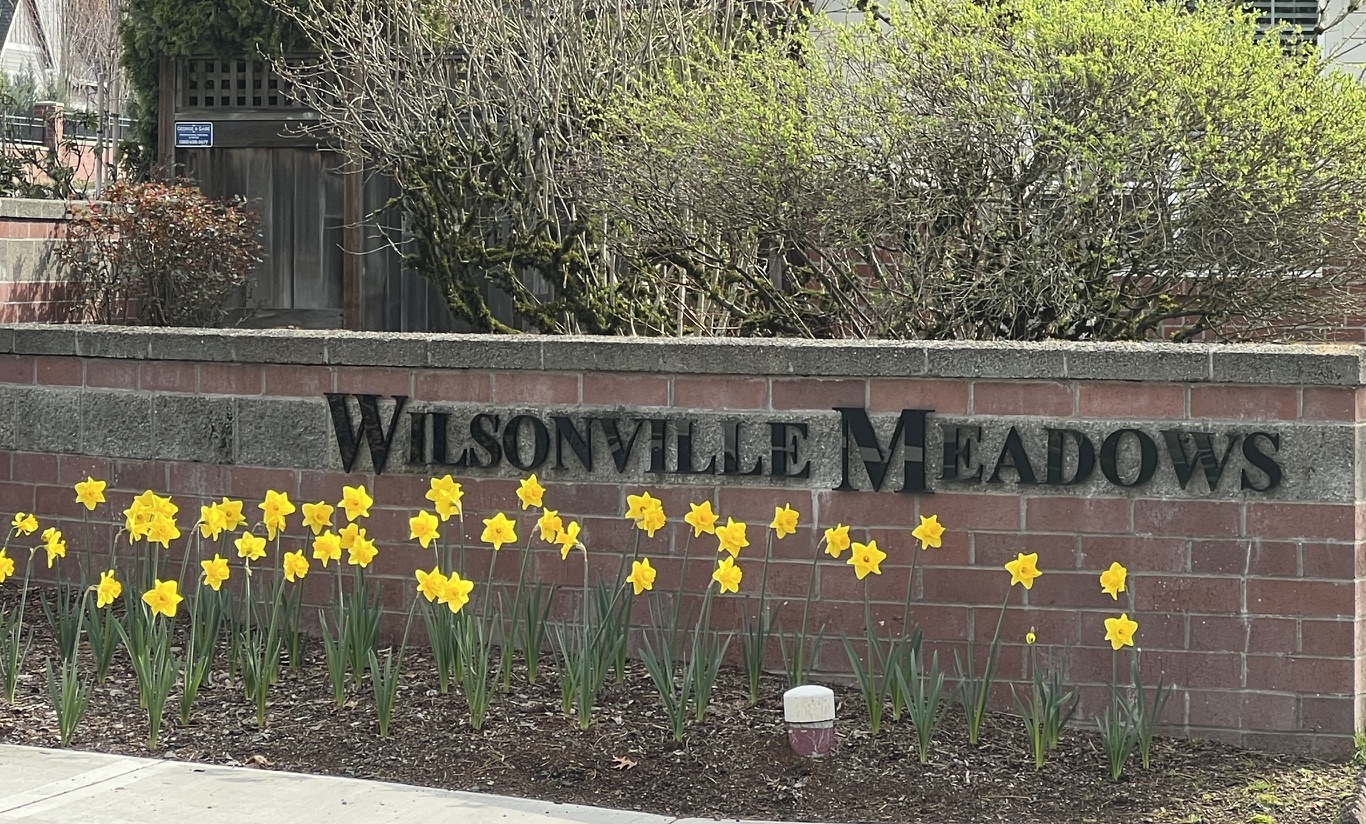
The board reinvested their remaining savings directly into the neighborhood. Since moving to PayHOA, they’ve started a three-year project to replace 47 aging, rusted mailbox units, planted more than 600 daffodil bulbs with 800 more on the way, and added low-cost street topper signs that improved the neighborhood’s aesthetic. Time the board once spent untangling management-company mistakes now goes toward projects like a city grant application for a public art installation.
The changes have had a profound effect on what was already a tight-knit community. The daffodils, in particular, are well loved. “People were just like, this is amazing,” said Kristin. Last year, two board members handled the daffodil planting on their own. This year, ten volunteers raised their hands to help.
A more neighborly way to handle things

The board also changed how it handles day-to-day issues. Instead of the formal violation letters that were handled poorly in the past, board members prefer to knock on a door and have a friendly conversation. The new approach has increased both compliance and connection. Many times, what looks like a violation is just a problem waiting to be solved. Neighbors step in to help with home maintenance when medical issues come up, participate in social events, and come together at shared amenities like a dog library, flower stand, and bakery.
“This has created way more cohesion, good feelings about the community, and goodwill,” said Kristin.
The current board has held their positions for more than three years. But should anyone choose to step down, they know PayHOA’s records will make the transition easy. Every architectural review request and past issue is on file, so whoever comes on next can get up to speed quickly. “It’s nice that we have a solid electronic trail, so when there’s a new board, it’s easy for anyone coming on to go into the record and see,” Kristin said.
Do your research, then let a good board do its job
Kristin’s advice to other HOAs considering self-management: do your research. Software alone isn’t the answer, but it can make it possible for a strong board to do more with the resources they have.
“If you have a really good board that communicates well with each other, this just amplifies and helps streamline everything you’re doing,” Kristin said. “We went from having a property management company for decades to being self-managed. With the amount of money we save by using PayHOA, we’ve not only built back our reserves to 150% funded, but we’re able to tackle big projects – mailbox replacement, over a thousand daffodils planted, street topper signs and more.”